

About Dorbs
The electric industry runs on people whose judgment can’t be replaced.
Their tools haven’t kept up. That’s the gap Dorbs was built to close.
Why Dorbs exists
The grid is one of the most important engineering systems ever built, and the people who keep it running are asked to solve problems with instruments that have barely changed in decades. An electrician reconstructs a fault in their head from one reading at a time. A utility team watches AI transform other industries while nothing in their own operations is built to absorb it.
Dorbs was founded to close that distance — to accelerate how people in the electric industry actually put AI to work, and to improve the experience and productivity of the people who run the grid.
The conviction underneath both of our products is the same: AI should amplify the people doing the work, never replace them.
Start where the work happens
We build from the field inward, not from the model outward. If it doesn’t hold up on a service call or in a control room, it doesn’t hold up.
Evidence over assertion
A system should show why it reached a conclusion, how strongly the evidence supports it, and when it cannot tell.
The practitioner decides
Our products hand people a capability they didn’t have. They don’t overrule the judgment of the person accountable for the outcome.
Leadership
Two backgrounds this problem requires.
XJEI is, structurally, a distributed systems problem wearing electrical clothing. Building it takes someone who knows how power behaves in the field, and someone who knows how independent nodes become a single coherent instrument. Fifty-five years between them, pointed at one problem.
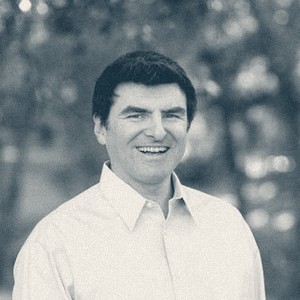
Andrija “Ani” Sadikovic
Founder & Chief Executive Officer
Wharton · 20 years — electrical engineering, AI
Ani started Dorbs from two things he wants to be true. That people should be able to live and work in an electrical environment that is actually safe, rather than assumed to be. And that a utility — especially a small one — should be able to run more efficiently and decide better without raising what the public pays for power.
Twenty years across electrical engineering and AI convinced him that both were within reach, and that nobody was building for them.
Connect with Ani on LinkedIn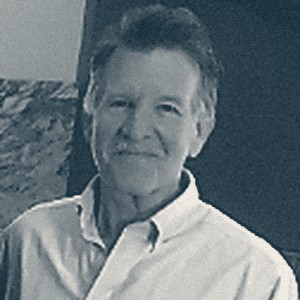
Winslow “Win” Cuthbert
Chief Technology Officer
MIT · 35 years — distributed network architecture, AI
Win has spent 35 years getting many independent nodes to behave as one coherent system. It is the problem sitting underneath XJEI: devices placed around a property are just devices until what they each see can be aligned, related, and reasoned over together.
He follows two subjects with equal appetite — AI systems and cold fusion. One of them became his day job.
What we’re looking for
We’re small on purpose — for now.
We’re at the stage where a few extraordinary people can still shape what this becomes. These are the backgrounds we’re building toward.
Embedded & signal processing
People who are at home close to the metal — sampling, timing, and getting clean measurements out of noisy real-world environments.
AI harness engineering
Building the layer that makes a model dependable in real operations — evaluated against the actual work, calibrated about its own confidence, and clear about when the evidence doesn’t support an answer.
Field engineering & partnerships
People who have run electrical work themselves and can build the relationships with the firms who will put this in front of their customers.
Utility operations
People who know how work actually gets done inside a utility, and what it takes for something new to survive contact with it.